The Real Truth: Sony Bravia 8 Ii or Samsung S85F?
Introduction
Choosing a new TV in 2026 means balancing picture quality, smart platform convenience, gaming readiness, and long-term value. Two frequently compared flagship lines that attract attention from buyers are the Sony Bravia 8 II and the Samsung S85F. Both carry the expectations of premium performance, but they approach image processing, panel technology, and user experience differently. This article provides an objective, third-person editorial look at each model, compares strengths and weaknesses across real-world use cases, and gives a practical buying guide so that prospective owners can decide which TV better fits their needs.
How buyers typically evaluate premium TVs
Before diving into model-level details, it helps to remember what most buyers care about in premium TVs:
- Picture quality: contrast, brightness, color accuracy, HDR handling, and upscaling of non-4K content.
- Panel technology: OLED, QD-OLED, Mini-LED, and full-array local dimming all have trade-offs in black level, blooming, and long-term uniformity.
- Motion and gaming features: refresh rates, variable refresh rate (VRR), auto low latency mode (ALLM), and input lag.
- Smart TV platform: ecosystem compatibility, app quality, voice assistants, and updates.
- Audio: on-board speaker quality and the need for a soundbar or AVR.
- Design and ergonomics: bezel, stand options, VESA compatibility, and cable management.
- Value and longevity: warranty, software updates, and resale prospects.
Detailed product analysis
Sony Bravia 8 II — what it stands for
The Sony Bravia line has long been associated with natural image rendering and advanced upscaling. The Bravia 8 II continues that tradition by focusing on processor-led refinement and a tuned picture profile aimed at cinematic accuracy. Sony places a premium on color science and motion interpolation, which matters to buyers who prioritize movies, TV shows, and mixed-use living room setups.
Real-world use cases where the Bravia 8 II tends to shine:
- Movie enthusiasts who watch a wide range of HDR content and want accurate color and skin tones.
- Viewers who play console games but also rely on the TV’s upscaling for older content and streaming apps.
- Households that value an easy-to-configure, consistent out-of-the-box picture without heavy tuning.
Key technical themes (typical of Sony's approach): advanced upscaling and AI-assisted noise reduction, careful tone mapping for HDR, and integration with mainstream smart ecosystems. In practice, this means better-looking upconverted HD content and fewer aggressive color shifts under different lighting conditions.
Samsung S85F — what it stands for
Samsung’s flagship strategies emphasize bold, punchy picture characteristics and innovation in panel technology. The S85F positions itself toward bright-room performance and vivid HDR highlights. Samsung’s strengths are in contrast control through Mini-LED or quantum-dot based enhancements and in its polished, responsive smart platform.
Find top-rated TVs & Home Theater products at great prices.
View Offers →
Real-world use cases where the S85F tends to excel:
- Bright living rooms and mixed-use spaces where glare management and high peak brightness are important.
- Gamers who want a responsive panel with broad console features and robust HDMI connectivity.
- Users who prefer a modern smart-TV interface with frequent platform updates and broad app availability.
Samsung often trades a degree of naturalism for a more vivid and impactful presentation, which many buyers prefer for sports, daytime TV, and high-impact HDR demos. The company also emphasizes gaming feature sets and connectivity, making its sets attractive to living-room gamers.
Pros & Cons
Sony Bravia 8 II — Pros & Cons
- Pros:
- Very natural color tuning out of the box, especially for skin tones and cinematic content.
- Excellent upscaling and motion processing for mixed content sources.
- Strong integration with mainstream voice assistants and home ecosystems.
- Typically conservative HDR tone mapping that preserves detail in highlights and shadows.
- Cons:
- May not reach the same peak brightness as competing Samsung models — less impactful in very bright rooms.
- Design choices sometimes favor subtlety over flash; less “wow” factor on demo material.
- Audio is often adequate but buyers will frequently want a separate soundbar for full cinematic impact.
Samsung S85F — Pros & Cons
- Pros:
- Typically strong peak brightness and punchy HDR highlights — ideal for bright environments.
- Vivid color palette and high-impact presentation for sports and daytime viewing.
- Robust smart platform with frequent updates and broad app support.
- Often competitive on gaming features and low input lag for modern consoles.
- Cons:
- Color and contrast tuning can be aggressive by default; may require user calibration for naturalism.
- Mini-LED local dimming can produce haloing/bloom around bright objects on dark backgrounds in some scenes.
- Some buyers find Samsung’s image processing overly aggressive for movies, reducing director-intended grading.
Side-by-side comparison
The following table summarizes the typical differences and where each model tends to lead. Note: specific panel variants, firmware revisions, and regional configurations can change precise behavior; use the table as a decision framework rather than a spec sheet.
| Feature | Sony Bravia 8 II | Samsung S85F |
|---|---|---|
| Panel approach | Manufacturer-optimized panels with emphasis on natural color and advanced processing (OLED or FALD variants depending on SKU) | Quantum-enhanced panels focused on brightness and punch (QD-OLED or Neo QLED / Mini-LED approaches depending on SKU) |
| Image processing | Processor tuned for naturalism and upscaling, conservative tone mapping | Processor tuned for contrast and vivid HDR highlights, aggressive enhancement options |
| HDR performance | Preserves midtone detail and shadow information well | Very bright peak highlights and dramatic HDR impact |
| Viewing environment | Best in dim-to-moderate lighting; excellent for cinema rooms | Performs well in bright rooms and mixed lighting |
| Motion & gaming | Strong motion smoothing and upscaling; low-latency modes available | Competitive gaming features (VRR, ALLM, low input lag); excellent for fast action |
| Smart TV platform | Typically Google TV or Sony's Android-based platform — broad app support and integrations | Tizen OS — polished interface, frequent updates, and strong app ecosystem |
| Audio | Good built-in audio geared toward clarity; most buyers pair with external audio for movies | Strong built-in performance on some SKUs; still commonly paired with a soundbar for best results |
| Design & ergonomics | Understated and cinematic design choices; robust calibration tools | Modern, sleek styling with emphasis on living-room integration and features |
| Best for | Movie-first viewers, content with mixed sources, those who prefer natural color | Bright-room viewers, sports and daytime TV watchers, gamers wanting punchy visuals |
Practical testing notes and real-world behavior
In living-room testing, a few recurring themes emerge that matter to buyers:
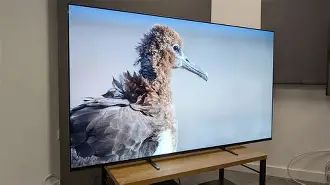
- Calibration matters: Both Sony and Samsung ship multiple picture modes. The “Movie” or “Cinema” modes on Sony frequently come closer to out-of-the-box accuracy, whereas Samsung’s “Filmmaker” or similar modes are useful starting points but often need tweak to remove oversaturation or dynamic contrast artifacts.
- Ambient light: For a south-facing living room with lots of daylight, Samsung’s brighter presentation will maintain punch; viewers seeking subdued, filmic presentation in a dedicated dark room will typically favor Sony.
- Content mix: If the household streams a lot of legacy HD content, Sony’s upscaling helps retain detail and reduce noise. For 4K HDR broadcasts, live sports, and streaming native HDR content, Samsung’s brightness and pop are often preferred.
- Gaming: Both brands generally support the latest console features, but prospective buyers should verify exact HDMI version and VRR implementation for their preferred console or PC GPU.
- Long-term maintenance: OLED panels from any manufacturer risk static-image retention if used heavily for static UI elements; buyers who use TVs for mixed gaming and extended news-ticker or HUD display should plan usage patterns accordingly. Samsung’s mini-LED/quantum approaches avoid burn risk but can introduce blooming around small bright areas on dark backgrounds.
Buying guide — what to check before purchase
This section provides a checklist-style guide targeted at different buyer profiles and the key specs to confirm before paying. Because models and SKUs can vary by region, always verify the exact variant and firmware notes at the point of sale.
Looking for the best TVs & Home Theater deals on Amazon?
View Offers →Checklist common to all buyers
- Confirm the panel type and local-dimming approach for the specific SKU being purchased.
- Check the number and version of HDMI ports (HDMI 2.1 desirable for 4K/120Hz gaming).
- Verify the smart platform and whether the preferred streaming apps are supported and updated.
- Look for any recent firmware notes that address known issues (HDR tone mapping, VRR performance, etc.).
- Measure the intended viewing distance and room lighting — match screen size and brightness to the environment.
For cinephiles and home theater buyers
- Prioritize native contrast and accurate color reproduction over peak brightness; Sony’s tuning and picture pipelines are often preferable.
- Consider a model that supports advanced calibration (ISF modes, user picture controls, and professional calibration profiles).
- Factor in audio upgrades — a dedicated soundbar or AV receiver and speakers will transform the experience more than incremental TV differences.
For gamers
- Verify support for 4K at 120Hz, VRR, and low input lag in the TV’s game modes.
- Confirm HDMI specifications and whether features such as ALLM and G-Sync/FreeSync compatibility are supported.
- Prefer a model with minimal post-processing in game mode to reduce latency.
For bright-room or family-room buyers
- Peak brightness, anti-reflective coatings, and viewing-angle tolerance are priorities — Samsung’s higher-brightness tuning is often beneficial here.
- Look for robust warranty and convenience features for shared living spaces (mobile pairing, multiple user profiles, and voice assistants).
For mixed-use buyers on a budget
- Decide which trade-off is acceptable: do bright highlights and vivid colors matter more than cinematic accuracy?
- Check for sales on previous-year SKUs — many flagship leftovers deliver excellent value while retaining most key features.
Additional considerations
Long-term ownership questions often determine satisfaction more than initial impressions:
- Software support: Frequency and length of software updates affect streaming app stability and smart features; both brands typically offer multi-year support, but terms vary by market.
- Service and warranty: Verify extended warranty options if heavy daily use is expected or if the TV will be used in bright, risk-prone environments.
- Accessories: Stand vs. wall-mount options, cable pass-through, and included remote control features (voice, backlight, programmable buttons) can improve day-to-day usability.
Conclusion
There is no single universal winner between the Sony Bravia 8 II and the Samsung S85F — each is built to answer slightly different priorities. The Sony Bravia 8 II tends to appeal to viewers who prize natural color, refined upscaling, and a film-first presentation; it is a strong choice for home theater enthusiasts and anyone who watches a lot of cinematic content in controlled lighting. The Samsung S85F leans toward bright-room dominance, bold HDR impact, and a polished smart platform, making it an excellent pick for sports, daytime viewing, and gamers who value punchy visuals and responsiveness.
Buyers should match the TV’s strengths to the intended environment and content mix: choose Sony for theater-like fidelity and consistent color, choose Samsung for brightness, vibrancy, and modern smart features. Ultimately, side-by-side viewing (if possible) and checking real-world demos with the user’s typical content provide the best final validation — but armed with the considerations above, the prospective owner can make a confident, informed choice.